
The British Society of Underwater Photographers Magazine: Winter Edition 2020
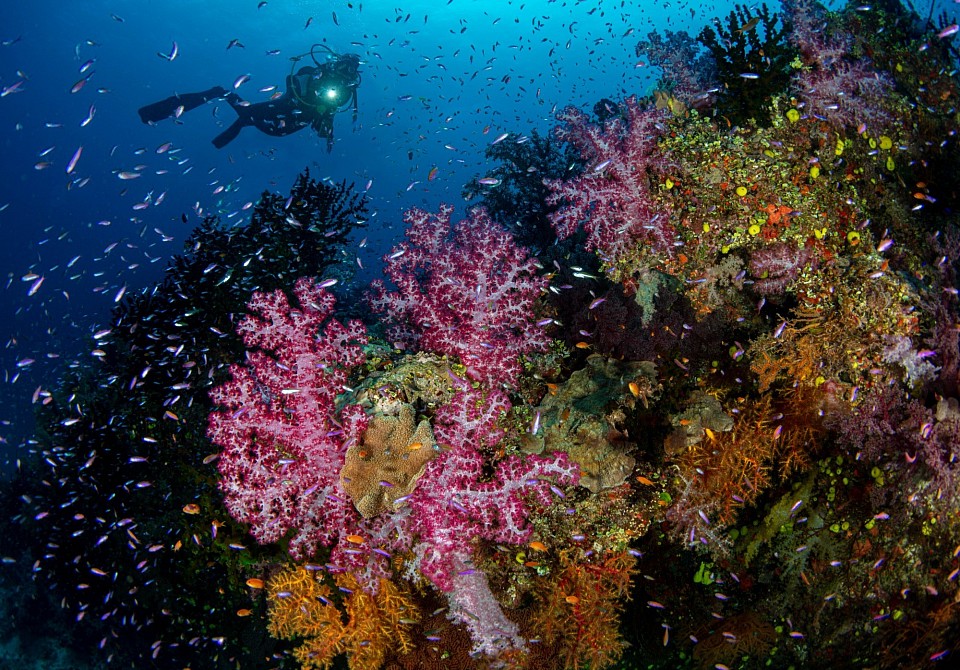
IN THE WAKE OF A PANDEMIC
by Jay and Dan Shipp
"Protect the ocean, and you protect yourself" - Jean-Michel Cousteau
It was early on a Fijian December morning in 2019. A light breeze, blue skies and a calm sea staged the perfect day for a diving excursion with the Jean-Michel Cousteau dive team. We boarded the Raluva Ni Wasa (Princess of the Ocean) and set off excitedly towards our destination - our brief, to shoot promotional photos and videos for the Jean-Michel Cousteau dive shop. The destination was Namenalala, a small idyllic island in the tropical South Pacific, a few kilometres south of Vanua Levu. It is a tiny volcanic island, but one which packs a punch. A white sandy beach skirts a lush green jungle interior. Red-footed Boobies circle above, while frigate birds soar higher still, exploiting the tropical thermals.
Namenalala sits within the Namena Barrier Reef, a horseshoe-shaped system which extends out to the Koro Sea. Both the island and the Namena Barrier Reef, which surrounds it, stand as a symbol of positive human intervention and community awareness. In 1997, Namena became Fiji's largest no-take marine reserve - a decision established by the chiefs from ten villages in the district. The initiative was a success - rejuvenating world-class dive sites in an area which was once under serious threat.
Neu, our Fijian dive guide, handed us a couple of dive tags – a requirement when diving within the reserve. The tags cost thirty Fijian dollars each. This money goes towards funding the no-take zone patrols, providing dive boat buoys, and educating local children. We were more than happy to pay.
Grand Central Station is the name given to one of the best dive sites in the reserve. We plunged into the water, keen to witness its beauty, and discovered, as the name suggests, a site bustling with life. Schooling Jacks, Barracuda, and several shark species welcomed us alongside colourful, hard and soft corals and abundant reef life. The experience exceeded our expectations. We left the reserve feeling optimistic about the future of this extraordinary marine haven.
Three months after visiting Grand Central Station, we could not have predicted how precarious the marine reserve's future balance might be. COVID-19 loomed, and with it, a change to the Fijian way of life. We witnessed this change firsthand. We had decided to stay in Fiji as the virus raged across the globe and the borders closed. We watched as other travellers made their way back to their respective countries, and we witnessed firsthand the repercussions that the COVID-19 virus had on a country that relies so heavily on tourism. Village chiefs along the coast took action by partially lifting the tabu status on their traditional fishing grounds to provide food for the people. The simple reality was that communities were fishing for subsistence and had to prioritize their survival over any potential impact this may have caused on underwater ecosystems. We spent eighteen months in Fiji. During that time, we could only hope that the virus would eventually run its course. The loss of revenue from tourism was costing the country dearly.
Over a year has passed, and daily life is becoming more accessible in the pandemic's wake. What of Namena? We finally got to see how the mayhem of 2020 affected the marine reserve. The sky was laden with tropical rainfall this time, and the water was a squall. The conditions were far from ideal, but we were keen to see how the reef had fared. We wondered if the large schools of fish and sharks were still there. To our relief, they were. The isolation of the Namena Marine Reserve is its saving grace, and it seems safe - for now. Without tourism, the people of Fiji will suffer, and the ripple effect may be detrimental to some of our much-loved dive sites. Jean-Michel Cousteau's quote is a compelling ecological message that is difficult to implement during a pandemic. How can the oceans protect the people of Fiji when people find it challenging to protect the ocean?
DIVING ALOR ON A BUDGET
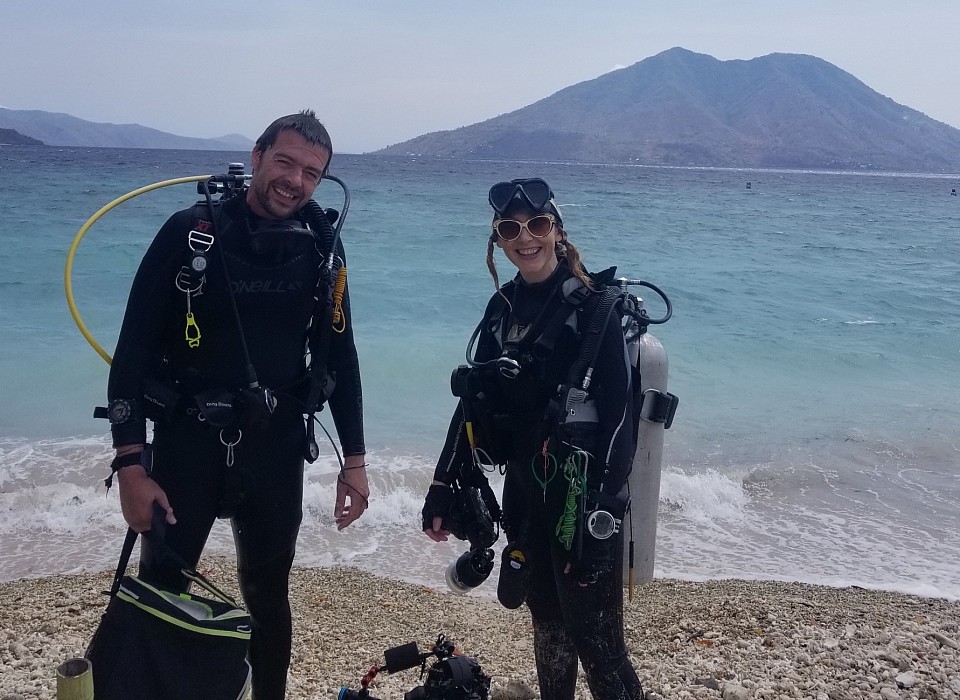
Jay and Dan back from a dive by Bert Veenendaal
by Jay and Dan Shipp.
We love to travel; we love diving - simple. A few years ago, we took our shoestring wilderness dive trips one step further. We quit our jobs, rented our house, and hoped it would fund a new lifestyle. Fast forward two and a half years, and we’ve got a fair bit of practice at sniffing out the ‘can-visit, can-dive’ places that may seem too expensive at first glance. This article is not about liveaboards or luxury accommodation but about how we have made ends meet.
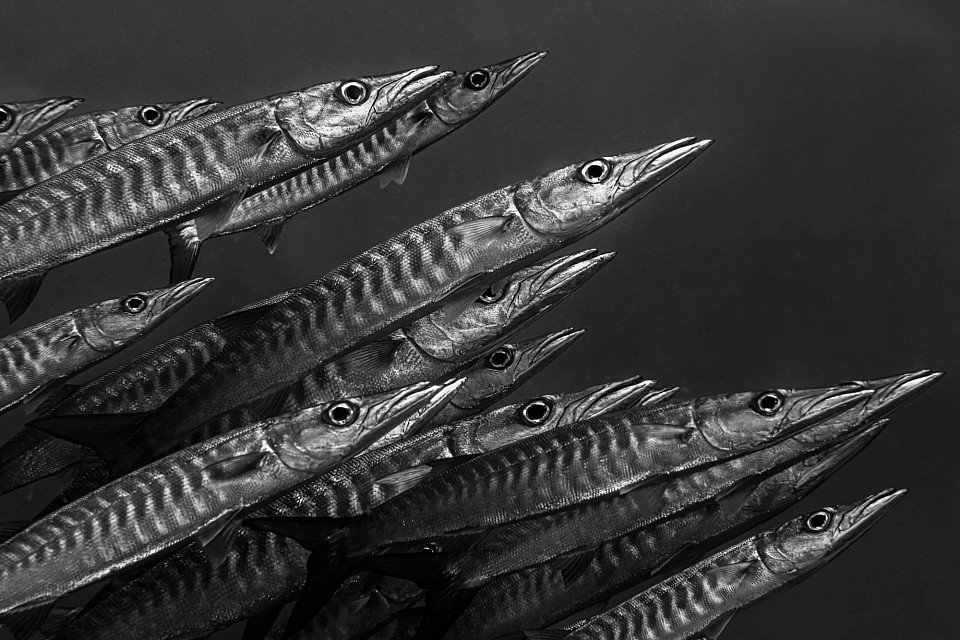
The waters around the west coast of Alor Island offer a wealth of subject matter for the underwater photographer, diver, and keen snorkeler. Pristine coral reefs bust with life that ranges from top predators and large pelagic creatures to an outstanding array of macro subjects. Nourished by the nutrient-rich waters of the Pantar Strait, the reefs are undeniably some of the most beautiful that we have encountered. Sustainable fishing practices and a complete lack of commercialism have helped protect the marine biodiversity inhabiting this special environment. Alor has a good variety of dive sites too. Caves, coral gardens, wall, and muck diving can all be found here.
Now that the carrot has been dangled, let’s get to the nitty-gritty— can you dive Alor on a budget? Well, that depends on your budget, of course, but we get by on £1000 for diving, food, accommodation, and local transport per month. It sounds like a lot, but it isn’t.
The eastern city of Kuppang is the gateway to Alor, and it’s best to fly there unless you want a long overland trip from Bali, as there is very little difference in price. We booked flights via Jakarta for ease of connecting to Alor from Kuppang, although a boat is available for this last leg. Be aware that the Kuppang to Alor flight has a 10Kg limit, upgraded to 20Kg if you fly with Wings from Jakarta. Once there, finding cheap accommodation in Indonesia isn’t a problem, but squeezing a few extra pounds off the nightly bill can make a difference. Booking your bed through a dive shop is convenient but not always the cheapest option. We tend to use booking.com to book one night of accommodation, giving us the opportunity to strike a better deal on a longer stay if we like it, and the flexibility to move on if we don’t. Owners can offer a discount because they don’t have to pay agent booking fees, and we walk away with a little more money for diving.
Eating out isn’t expensive in Alor. A typical evening meal involving fried rice and vegetables will cost around £1-2, rising to £3 if you want chicken or fish as well. Breakfast generally comes with accommodation and is also fried. If, like us, you can’t live on fried food for too long, you may consider visiting the vibrant hubbub of the local market to buy food and cook for yourselves.
Finding a room with self-catering facilities can be difficult in Indonesia, and in Alor, it’s virtually impossible. If you like your campsite cooking and you’re pretty mean with a barbecue, all is not lost. We managed to solve the problem by building our own kitchen in our Sebanjar Bungalow. No one seemed to mind us doing this— in fact, the staff found it quite amusing. Simple, but effective, we sourced a table, hired a camp stove, and bought some pans and cutlery.
A major money-saving strategy we employ is to mostly do ‘independent’ shore diving (this means diving without a guide or a boat) and only doing guided boat dives one day a week. It does mean we won’t get to dive every dive site and may mean we miss some of the action. It’s a long way to come if you don’t want to make concessions like these on your hard-earned holidays, but it’s our best option as we wouldn’t get to dive in Alor otherwise.
As we all know, a key point about diving independently is that it is a risky business. Many websites advise that a good level of diving experience is necessary even with a guide, and we cannot emphasize this enough. Real caution must be taken when diving in an area that has very strong currents without any boat support – at times it reaches 12 knots in the Pantar Strait. We always tell someone when, where, and for how long we expect to dive. We dive with SMB’s, reef hooks, signalling devices, and a charged mobile phone in a waterproof case. Alor isn’t short of mobile phone masts, so signal is pretty reliable wherever you are. Equally critically, we monitor local tide times and seek advice from locals to understand its behaviour. If we’re in doubt, we don’t get in.
The final critical ingredient to diving Alor on a shoestring is arranging transport. Staff at your accommodation will be able to help. We’ve opted for mopeds because they give us the freedom to dive any spot that we’ve heard is a decent shore dive.They are also by far the cheapest and most convenient way of getting around Alor. Expect to pay £3-£5 per day, with a full tank of petrol costing about £1.50. We would advise trying it before you hire, as they may class helmets, lights, indicators, brakes and even pumped up tyres as optional extras. Despite leaving the UK having never ridden mopeds, with a little practise and a healthy dose of survival instinct we learnt to ride in Indonesia, even with a full complement of dive and camera equipment on board. No, it’s not for everyone. The roads are generally diabolical and the only law everyone seems to obey is gravity, but we stick by the rule that if we go slow, concentrate, and expect the unexpected, we’ll get there in one piece.
In conclusion, diving Alor on a budget isn’t easy when you’ve only got a precious few weeks of holiday. Local research and exploration takes time, which is a trade off some people won’t want to make. If you want ease and simplicity in your budget Indonesian dive trip then head to Tulamben in Bali or Bunaken in Sulawesi. If you want to scrub the idea of ‘easy’ and go on an unforgettable adventure somewhere more remote, with excitement, uncertainty and the chance of capturing some unique moments in your viewfinder, then look no further than Alor. Hopefully, our experiences in this incredible part of Indonesia will help you to decide whether the time and effort is worth it – we think it most definitely is!